
Wastewater Treatment Methods in Tirupur Dyeing Units: Environmental Solutions
Wastewater treatment methods in Tirupur dyeing units are critical for managing the high volumes of effluent generated by the textile dyeing industry. Modern treatment methods ensure environmental compliance and sustainability. This comprehensive guide explains various wastewater treatment approaches used in the region, from basic primary treatment to advanced zero liquid discharge (ZLD) systems.
Table of Contents
Wastewater Treatment Methods in Tirupur Dyeing Units – Characteristics of Effluent
Textile dyeing produces high-volume wastewater containing dyes, chemicals, and heavy metals. pH levels vary significantly. Contains suspended solids. Water consumption very high – 100-150 liters per kg of fabric. Must be treated before discharge.
Primary Treatment Methods
Screening and Settling: Removes large particles and suspended matter. Gravity-based settling tanks. Effectiveness 50-70% removal. Initial treatment stage. Low cost implementation.
Flotation Systems: Air-based separation process. Removes oils and fine particles. Effectiveness 60-80%. Added chemicals help coagulation. Common in Tirupur units.
Chemical Coagulation: Uses chemicals to aggregate particles. Enables faster settling. Effectiveness 70-85%. Cost-effective method. Widely used approach.
Advanced Treatment Systems
Activated Carbon Adsorption: Removes dissolved dyes. High efficiency (85-95%). Can be regenerated and reused. Initial capital investment needed.
Membrane Filtration: Microfiltration removes bacteria. Ultrafiltration removes viruses. Nanofiltration removes dyes. Reverse osmosis removes all impurities. Effectiveness 95%+ depending on type.
Zero Liquid Discharge (ZLD) Systems
ZLD eliminates all wastewater. Multiple treatment stages. Final evaporation step. Produces reusable water. Highest environmental standard. Most expensive option. Government incentives often available.
Benefits: Compliance with regulations. Water reuse and cost savings. No environmental pollution. Market advantage. Long-term sustainability.
Challenges: High capital cost. Requires skilled operators. Complex maintenance. Space requirements. Energy-intensive process.
Biological Treatment Methods
Activated Sludge Process: Uses microorganisms to decompose organic matter. Very effective (80-90%). Time-intensive. Requires aeration. Common in medium-sized units.
Sequencing Batch Reactors (SBR): Batch treatment system. Flexible operation. Better control of conditions. Efficient removal (85-95%). Growing adoption in Tirupur.
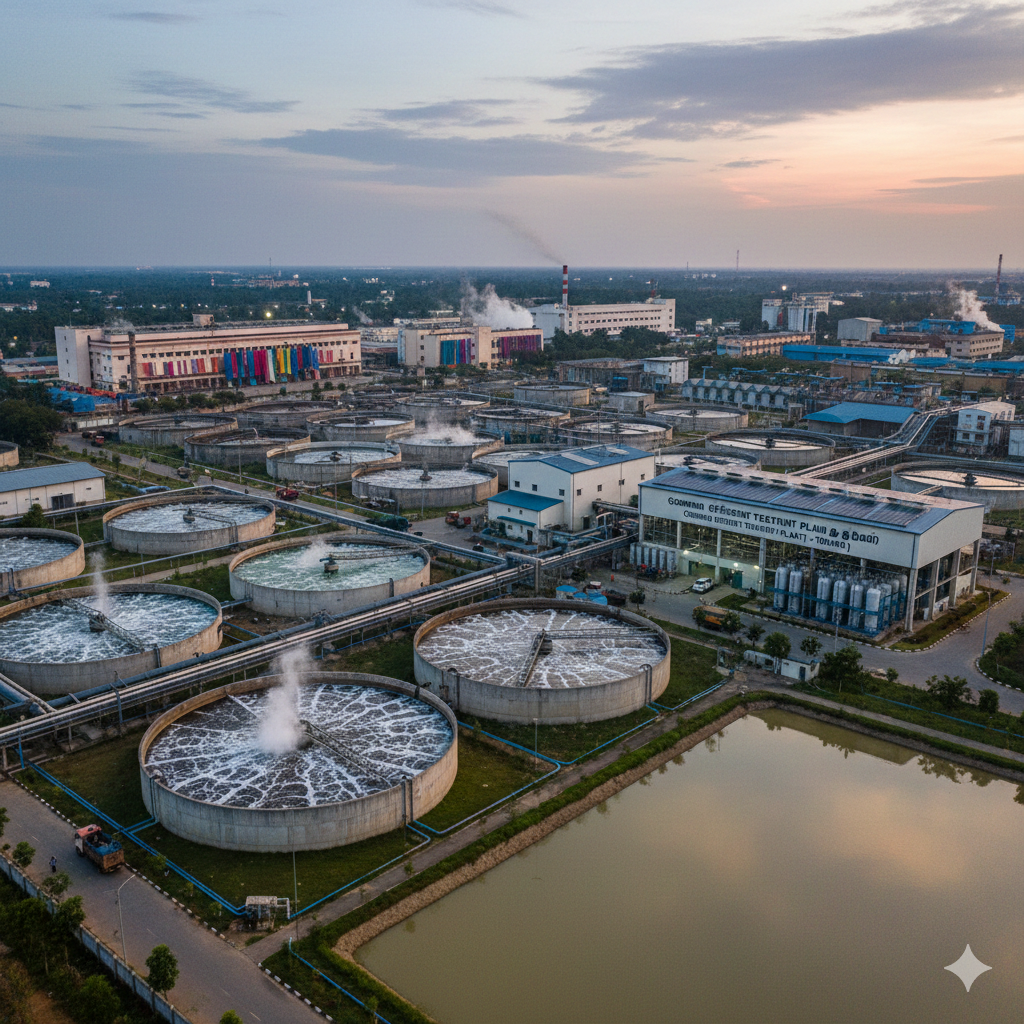
Tirupur Wastewater Treatment Infrastructure
Common Treatment Chain: Primary settling → Coagulation → Flotation → Biological treatment → Final filtration. Most units follow this sequence. Variations based on capacity and waste types.
Communal Treatment Plants: Tirupur has central treatment facilities. Shared by multiple units. Cost-Implementing effective wastewater treatment methods in Tirupur dyeing units through communal treatment plants is a strategic approach.effective for small manufacturers. Quality control ensured. Regulated discharge standards.
Regulatory Compliance
Indian Standards: MINAS guidelines for effluent standards. pH between 6.5-8.5. BOD limit 30 mg/L. COD limit 250 mg/L. TDS limit 2100 mg/L. Color limit (ADMI 50-75). Heavy metals specific limits.
Certifications: ISO 14001 environmental certification. CETP (Common Effluent Treatment Plant) membership. Regular monitoring required. Third-party audits mandatory.
Cost Analysis
Primary Treatment: Rs 5-10 lakhs for small unit. Operational cost Rs 5-10 per kiloliter.
Considering the cost of wastewater treatment methods in Tirupur dyeing units, advanced treatment systemsAdvanced Treatment: Rs 20-50 lakhs investment. Higher operational cost. Better water quality.
ZLD Systems: Rs 100+ lakhs investment. Highest operational cost. Best environmental outcome. ROI through water reuse.
FAQ
Which method is best?
Depends on budget and regulations. Start with primary treatment. Add advanced systems as needed. ZLD for sustainability commitment.
What’s the timeline?
Primary system: 3-6 months. Advanced system: 6-12 months. ZLD: 12-18 months typical.
Are there government subsidies?
Yes, up to 50% support available. Check with state pollution board. Apply through proper channels.
How often to maintain?
Weekly monitoring. Monthly maintenance. Quarterly professional checks. Annual compliance audit.
Pros and Cons of Different Systems
Pros of Primary: Low cost, Simple operation, Quick implementation, Effective for basic treatment
Cons of Primary: Limited effectiveness, Doesn’t remove all pollutants, Frequent cleaning needed, Environmental concerns
Pros of Advanced: High efficiency, Reusable water possible, Better compliance, Long-term savings
Cons of Advanced: High capital cost, Complex operation, Maintenance intensive, Space requirements
Conclusion
Wastewater treatment is essential for Tirupur’s sustainability. Modern methods provide environmental protection. Choose appropriate system based on needs and budget. Compliance ensures business continuity. Partner with experienced service providers for optimal results and sustainable operations.
Key Considerations for Implementation
When selecting wastewater treatment methods in Tirupur dyeing units, several critical factors must be evaluated. Budget constraints often limit options, with primary treatment systems requiring Rs 5-10 lakhs for small units, while advanced systems demand Rs 20-50 lakhs. Medium and large facilities may invest over Rs 100 lakhs in comprehensive ZLD systems.
Environmental regulations mandate strict compliance with MINAS guidelines and emission standards. Many Tirupur dyeing units have adopted ISO 14001 environmental management certifications, demonstrating their commitment to sustainable practices. Government subsidies covering up to 50% of treatment system costs encourage industry adoption.
Operational maintenance is another crucial consideration. Primary treatment systems require weekly monitoring and monthly cleaning, while advanced systems demand daily parameter monitoring and skilled technical expertise. ZLD systems need continuous optimization to maintain efficiency and prevent scaling issues.
Successful implementation also depends on adequate space allocation for treatment infrastructure. Primary systems are relatively compact, but advanced treatment chains and ZLD units require significant land area. Many Tirupur facilities utilize multi-story treatment designs to optimize space usage.

Leave your comment