
Top Quality Checks for Tirupur Garment Suppliers: Complete Inspection Guide
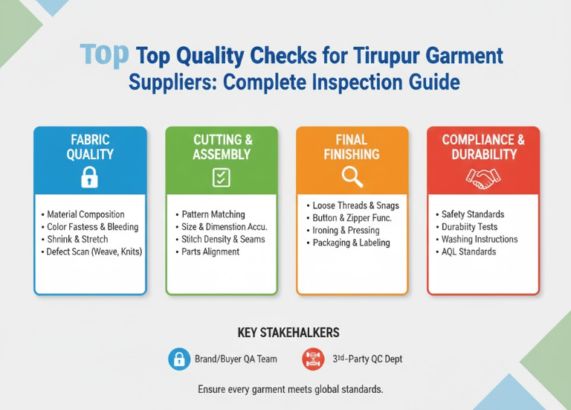
Quality checks are essential when sourcing garments from Tirupur suppliers. This complete inspection guide helps you identify reliable manufacturers and ensure consistent quality in every bulk order.
Table of Contents
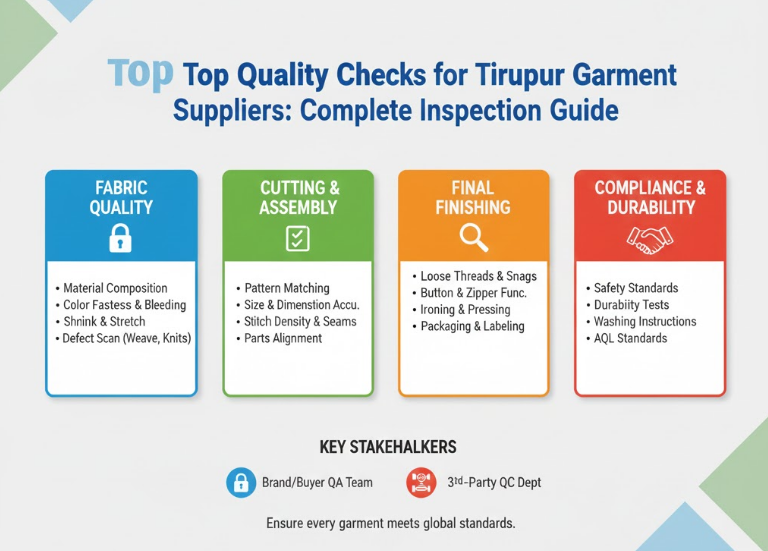
Why Quality Checks Matter for Tirupur Garment Suppliers
Tirupur produces quality garments but standards vary between factories. Comprehensive quality checks protect your brand reputation. They prevent costly returns and customer complaints. Quality inspections ensure compliance with international standards. Regular checks build trust with suppliers.
Pre-Production Quality Checks
Fabric Inspection
Test fabric weight and thickness using standardized scales. Check fabric color uniformity across the entire bolt. Verify fiber content matches purchase specifications. Test fabric shrinkage by washing samples. Examine for defects like holes, stains, or tears.
Dye Quality Assessment
Verify dye lot numbers match purchase orders. Check color fastness to washing, rubbing, and perspiration. Test color stability in sunlight exposure. Confirm color samples match approved standards exactly.
Thread Quality Analysis
Inspect thread strength and consistency. Verify thread color matches design specifications. Check for thread breakage or weak spots. Test thread durability through mechanical testing.
In-Process Quality Control for Tirupur Garments
Cutting Quality
Inspect cutting precision and accuracy. Check pattern alignment on fabric. Verify symmetry in all garment pieces. Monitor fabric waste and utilization rates.
Sewing Quality
Examine stitch length consistency. Check seam strength through pull tests. Inspect for broken stitches or loose threads. Verify seam alignment and straightness. Test seam allowances match specifications.
Finishing Quality
Inspect hemming for even stitching. Check button and zipper attachment strength. Examine collar and cuff quality. Test label attachment security. Verify seam pressing quality and flatness.
Post-Production Quality Checks
Garment Measurements
Verify length, width, and sleeve measurements. Check sleeve cap height and armhole depth. Test garment symmetry side to side. Use calibrated measuring tools for accuracy.
Color Matching
Compare finished garment colors to approved samples. Check color consistency across all garments in batch. Test color stability after washing and drying. Verify dyeing is uniform without streaks or uneven areas.
Pilling and Durability
Test fabric pilling resistance using standard pilling tests. Check fabric strength and tear resistance. Test for snags and pulls. Verify color fastness after multiple wash cycles.
Button and Zipper Inspection
Test button attachment strength with pull tests. Verify zipper operation smoothness. Check zipper durability through multiple use cycles. Inspect for broken zippers or buttons.
Detailed Quality Control Checklist
Threadwork and Stitching Quality
Stitch count should be consistent throughout. Seams must be straight without puckering. No loose threads or hanging ends allowed. Seam strength must meet specifications. Stitching pattern must match design.
Fabric Quality Standards
Fabric weight tolerance: ±5% of specification
Fabric width tolerance: ±2 cm of specification
Thread count consistency: ±2% variation acceptable
Color fastness: Minimum grade 3 for all dye types
Shrinkage: Maximum 3-5% in length and width
Common Quality Issues in Tirupur Garments
Loose Stitching
Caused by dull needles or incorrect tension. Results in seam failure during wear. Prevention: Regular needle changes and tension checks.
Dye Variations
Occurs from inconsistent dyeing machines. Shows as color streaks or patches. Prevention: Use certified dyers and color matching standards.
Shrinkage Problems
Results from pre-shrinking failures. Causes garment size reduction after washing. Prevention: Proper pre-shrinking and testing procedures.
Thread Breakage
Causes gaps in seams. Results from low-quality thread or needle issues. Prevention: Use high-quality thread and maintain equipment.
Misaligned Patterns
Occurs from cutting or sewing errors. Shows as uneven pattern placement. Prevention: Proper marking and skilled operators.
How to Conduct Quality Audits in Tirupur Factories
Factory Setup Verification
Visit production floor conditions. Check equipment maintenance. Verify worker training programs. Review quality control procedures. Inspect material storage conditions.
Process Monitoring
Observe cutting operations. Watch sewing process. Monitor finishing procedures. Check quality control checks. Review final inspection processes.
Documentation Review
Examine production records. Review quality test results. Check material certificates. Verify testing standards compliance. Review inspection checklists.
Random Sampling Protocol
Select random samples from production batch. Inspect minimum 5% of total production. Test for color, size, and stitching quality. Document all findings. Report defects immediately.
Tirupur Quality Standards Comparison
ISO 9001 Certified Factories: Highest standards, 95%+ quality rate
GOTS Certified Units: Organic standards, strict environmental controls
OEKO-TEX Certified: Chemical-free assurance, highest safety standards
Non-certified Factories: Variable quality, higher defect rates
Red Flags for Low-Quality Tirupur Suppliers
No formal quality control process. Lacking certifications and standards. Unwilling to provide samples. No testing equipment visible. Poor factory conditions. Workers without proper training. No documentation systems. Refusal to allow inspections.
Best Practices for Quality Monitoring
Establish clear quality standards in writing. Conduct regular factory audits. Maintain detailed inspection records. Use third-party inspectors for large orders. Test random samples from each shipment. Keep communication open with manufacturers. Build long-term partnerships with quality-focused suppliers.
Frequently Asked Questions
How often should quality audits be conducted?
Conduct audits before first production, during production, and before shipment. For ongoing suppliers, audit quarterly or bi-annually.
What is acceptable defect rate?
Industry standard is 1-3% for non-critical defects. Critical defects should be zero tolerance.
Which testing standards apply to India?
Tirupur garments should comply with IS (Indian Standards), ASTM, and ISO standards. US exports need CPSC compliance. EU exports need CE marking.
Can quality improve over time?
Yes, consistent feedback and audits help suppliers improve. Provide training and clear specifications. Document improvements in each audit cycle.
Who should conduct inspections?
Use third-party professional inspectors for objectivity. Your quality team can conduct follow-up checks. Factory’s own QC provides initial inspection.
Pros and Cons of Different Quality Checking Methods
Pros:
In-person factory audits provide comprehensive assessment
Third-party inspections ensure objectivity and compliance
Regular testing prevents recurring quality issues
Clear standards reduce defects significantly
Documentation creates accountability
Partnership approach builds trust and improvement
Cons:
Audits are time-consuming and expensive
Language barriers complicate communication
Some issues only appear after multiple wear cycles
Testing adds production time and cost
Suppliers may resist frequent inspections
Standards may vary by market and customer
Conclusion
Quality checks are non-negotiable when sourcing from Tirupur garment suppliers. This comprehensive inspection guide provides clear standards for every production stage. Follow these guidelines to maintain quality consistency. Conduct regular audits and maintain documentation. Build strong partnerships with quality-focused manufacturers. Your customers deserve reliable, well-made garments produced to the highest standards. Start implementing these quality checks today to protect your brand and business success.
Tirupur garments company name List,
Tirupur garment suppliers online,
Tirupur garment suppliers phone number,
Tirupur garments wholesale price list,

Leave your comment